
How to Get Rid of Bad Handwriting in IELTS

In the paper-based IELTS bad handwriting is a real problem: if the examiner struggles to read what you’ve written, it could negatively impact your score. Handwriting can potentially affects 3 IELTS skills out of 4 (Listening, Reading and Writing), because all the answers are written by hand. Any answer that isn’t legible will receive 0 marks, which means 75% of your score can suffer from poor handwriting.
Legible handwriting is just as important as your content. Yet it is a common not only for younger people but also for adults to struggle with their handwriting. The problem is compounded by the fact that we type more than write by hand these days, and our handwriting skills deteriorate because we don’t use them enough. Luckily there are effective ways to make your handwriting clear and readable.
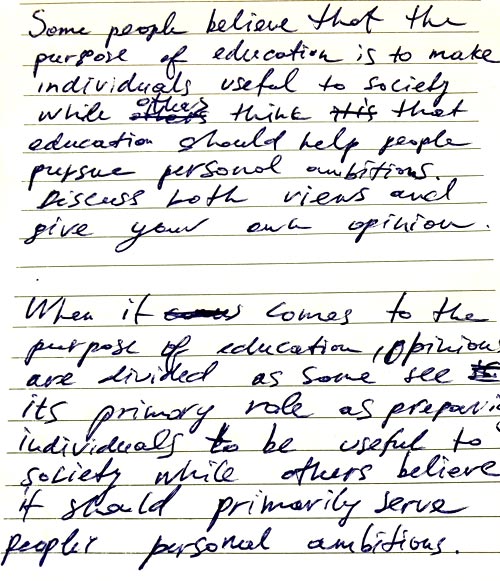
Practical Tips to Make Your Handwriting Easy to Read
1. Switch to Print Handwriting: If you usually write in cursive, switch to print handwriting. This style, where each letter is separate and not connected, significantly improves legibility and readability. It’s easier for examiners to decipher individual letters and words, reducing the risk of misunderstandings.

2. Relax Your Grip: A tight grip on the pen can lead to hand cramps and uneven writing. By loosening your grip, you’ll find that writing becomes more comfortable, and you can maintain a consistent quality of handwriting for longer periods of time without your hands tensing up.
3. Use Double-Ruled Paper for Practice: This is a great tool for keeping your letters uniform. Keep your letters between the two lines, just touching the top line, with only taller letters like ‘t’ and ‘f’ extending above. Make sure your capital letters stand above the top line – the difference between them and lowercase letters has to be clear. If there are no visible capitals starting each sentence, your score for Grammatical Range and Accuracy may be impacted.

4. Slow Down: Speed can often be the enemy of legibility. Take your time to form each letter properly. This might feel slow at first, but accuracy is more important than speed in the beginning stages of improving your handwriting.
5. Gradually Increase Your Speed: Once your writing looks fine when you’re writing slowly, start to gradually increase your writing speed. Regularly read back what you’ve written. If it’s understandable, you’re maintaining good control at that speed.
6. Practice regularly: Like any skill, handwriting improves with practice. Commit to writing at least one page by hand every day. You’ll likely notice a significant improvement in just two weeks.
Improving your handwriting for the IELTS is not just about making your answers legible. It’s about ensuring that your knowledge and hard work are accurately represented and understood. By making these tips into your daily routine, you can fix poor handwriting, once and for all. Keep going, don’t give up, and with regular practice, your handwriting will turn from a weakness to a strength in your IELTS journey.